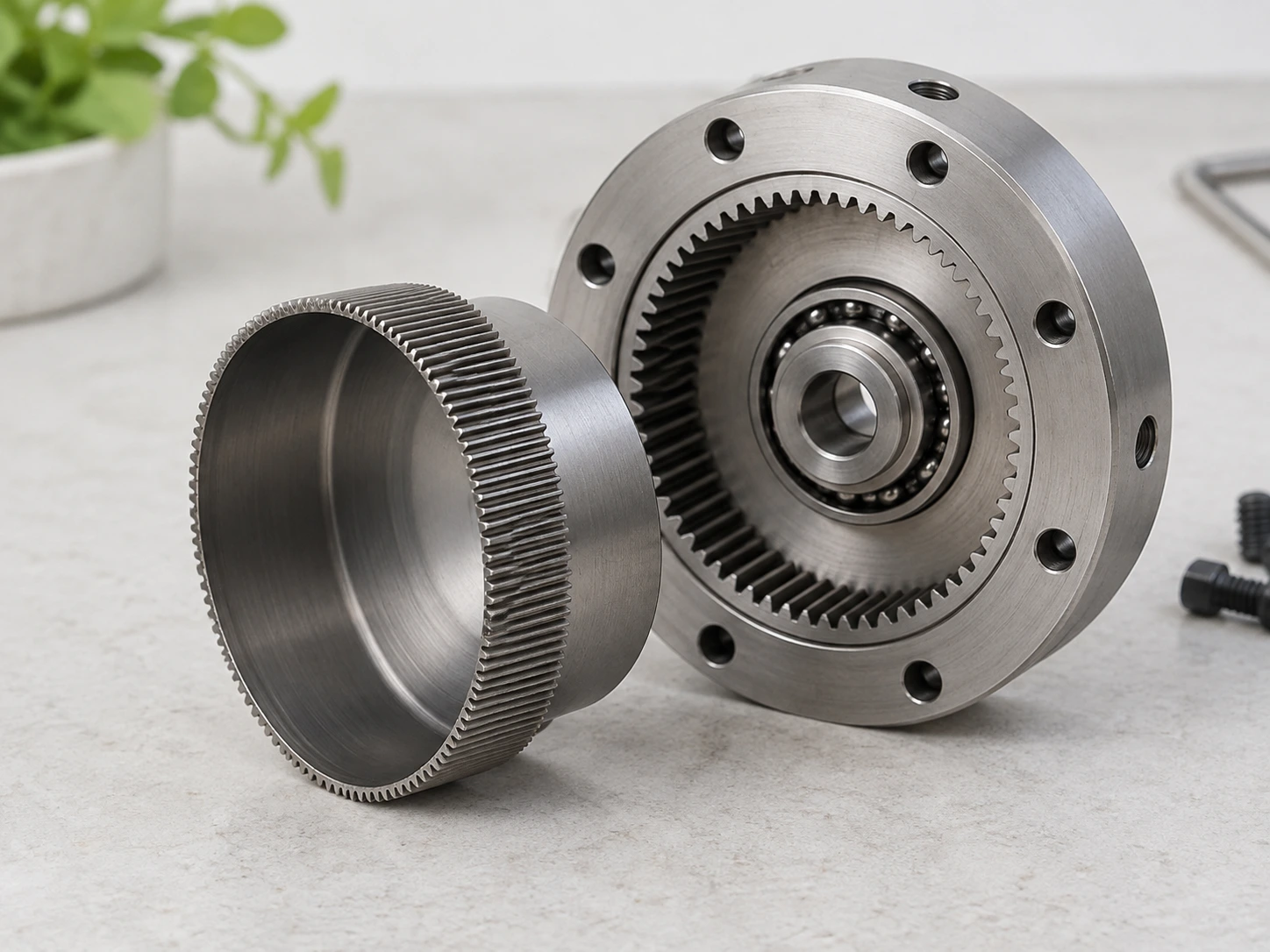
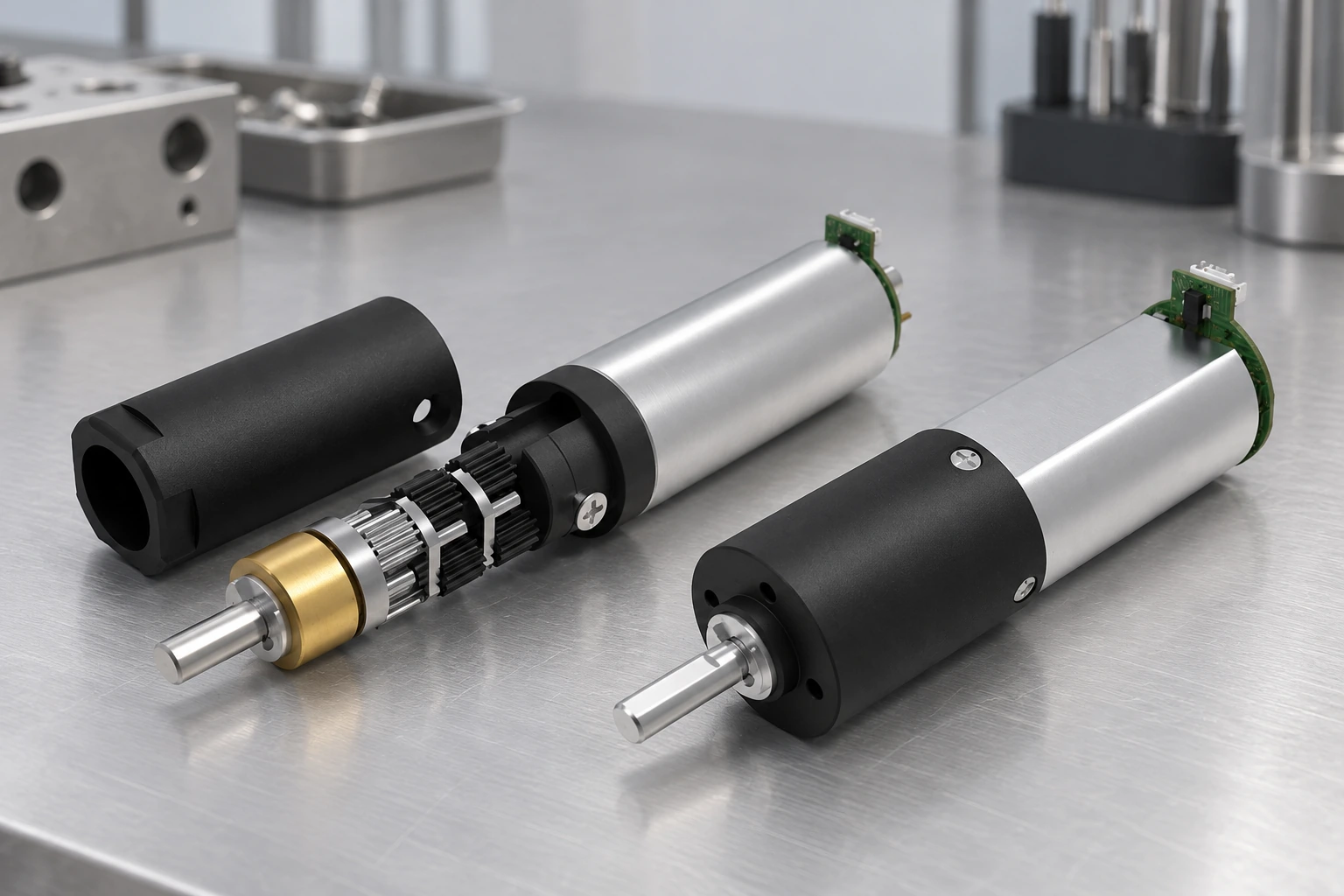
Anime-style industrial robotic assembly in a Japanese environment, shown as an application illustration
← Industry & component applications

REDUCERS / BEARINGS / GUIDES

Industrial & robotics

Evaluate reducer and sliding lubrication by load, speed, temperature and relubrication interval.

Robotics & automation drives

Review lubrication in reducers, bearings and guides

Start with the mechanism and manufacturer specification, then compare lubrication locations, quantities and operating conditions.

Small actuators, grippers and electric cylinders
Contact location
Gear, lead-screw and sliding-guide contacts in the specific mechanism.
Process review
Identify the specified application points, then compare starting resistance and condition after cycling under matching conditions.

Evaluation inputs

  • Application locations on the drawing and polymer/metal materials
  • Load, speed, stroke and duty cycle
  • Specified material/dose, starting force and durability criteria
Linear guides and precision sliding interfaces
Contact location
Guide surfaces, support bearings and lubricant supply paths.
Process review
Distinguish oil from grease lubrication and review lubricant supply and migration.

Evaluation inputs

  • Guide design, contact materials, load and speed
  • Specified viscosity, supply method and maintenance
  • Migration, cleanliness and condition after cycling
Core RV and strain-wave reducers
Contact location
Distinguish RV gear/pin contacts from strain-wave tooth contacts and bearings.
Process review
Follow model-specific lubricant/quantity and the component manufacturer’s change and validation requirements.

Evaluation inputs

  • Model, reduction ratio, orientation and specified records
  • Application points and quantities for teeth and bearings
  • Actual-machine torque, heat, durability and acceptance requirements
Discuss your component and conditions

EXPLORE THE COMPONENT

Explore where the material works.

Select a component to explore its requirements.
Greased industrial reducer
01Reducers and gears

CONDITIONS TO REVIEW

Load, speed, duty cycle, heat and lubricant retention

See the test methods ↓Explore the component challenge
02Guides and sliding parts

CONDITIONS TO REVIEW

Materials, roughness, sliding speed and noise triggers

See the test methods ↓Explore the component challenge
03Seals and housings

CONDITIONS TO REVIEW

Environment, contacting fluids and seal compatibility

See the test methods ↓Explore the component challenge

OPERATING CONDITIONS

Operating conditions & tests

Compare before and after material changes under matching conditions.

01
Load and speed changes

Load and speed changes

Measure heating and operation by load/speed on the same mechanism.

Record
Load, speed, temperature, noise and wear locations

02
Continuous and repeated operation

Continuous & repeated duty

Match cycles and lubrication conditions and check retention.
Record
Dose, elapsed time, throw-off and leakage
03
Seals and external exposure

Seals and external exposure

Compare actual contacting fluids and seal materials.

Record
Fluid identity, contact conditions and dimensional/visual changes

APPLICATION TESTING

Component test sequence

  1. Review the component
  2. Set test criteria
  3. Compare materials
  4. Verify the assembly

TEST BRIEF

Information for your enquiry

Component and materials
Material grades, preparation, dimensions, contact surfaces and assembly conditions.
Environment and operation
Load and speed / Ambient and generated heat / Sealing and lubrication method
Process and current material
Current grade, application/cure/cleaning conditions and when behaviour changed.
Acceptance and records
Targets, measurement methods, before/after photographs and values, and required life conditions.

DOCUMENTS & SAMPLES

Documents & evaluation samples

Request the information you need for product selection and internal evaluation.

Discuss these requirements
TDS

Technical properties & use guidance

Request
SDS

Safe handling & storage

Request
Evaluation sample

Try the material on your parts & process

Request

EUBO · PRIVACY

Cookies & storage settings

These choices apply to this browser. Browsing or scrolling does not give permission for optional purposes.

Essential site & enquiry features

Used for privacy preferences, enquiry continuity, unsent text and attachments, and reply status. This storage is not used for analytics or advertising.

Always on

If optional tools are added, we will ask for a new choice. Preferences are valid for up to 180 days and can be changed through Cookie settings in the footer.